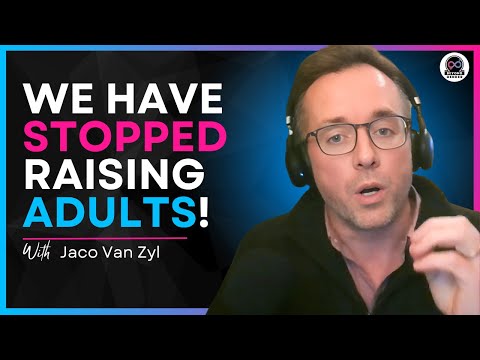
Jaco van Zyl
Psychotherapist and cultural critic
Jaco van Zyl is a psychotherapist whose work examines what happens when a culture trades shared obligations for individual self-definition. For European clinicians navigating contested youth gender medicine, his thesis — that a generation raised on 'my truth' is psychologically unmoored — supplies a broader diagnostic frame for the clinical caseloads accumulating across the continent.
Jaco van Zyl is a psychotherapist whose clinical and cultural work explores the psychological cost of a society that has replaced shared obligations with the relentless pursuit of individual gratification. His central argument is not primarily about gender — it is about epistemology: what happens to a mind, and to a generation, when the boundary between subjective feeling and objective reality quietly dissolves?
In the Beyond Gender episode What Happens When a Generation Grows Up Without Reality (episode 13, May 2025), van Zyl joined hosts Stella O'Malley, Mia Hughes and Dr Bret Alderman to unpack that question in the context of contemporary youth psychology. His diagnosis reaches beyond any single clinical presentation: when institutions — from schools to therapists' consulting rooms — validate personal truth rather than gently testing it against a shared world, they deprive young people of the productive friction that builds psychological resilience.
For European audiences the analysis carries particular weight. Sweden, Finland and the Netherlands have each tightened prescribing guidelines for youth gender medicine after systematic reviews found the evidence base insufficient. France and Germany are in active clinical debate, and EU institutions are watching how member states redesign care pathways. Van Zyl's framework helps explain not only why demand for these interventions rose so rapidly but why many young people experiencing gender distress may be better served by exploratory psychotherapy than by straightforward affirmation.
His contribution to the broader European conversation is ultimately a cultural one: restoring a shared grip on reality — in families, classrooms and consulting rooms — is not a conservative manoeuvre but a clinical necessity. That argument, made with therapeutic rather than ideological intent, is precisely what continental practitioners debating these questions need to hear.